
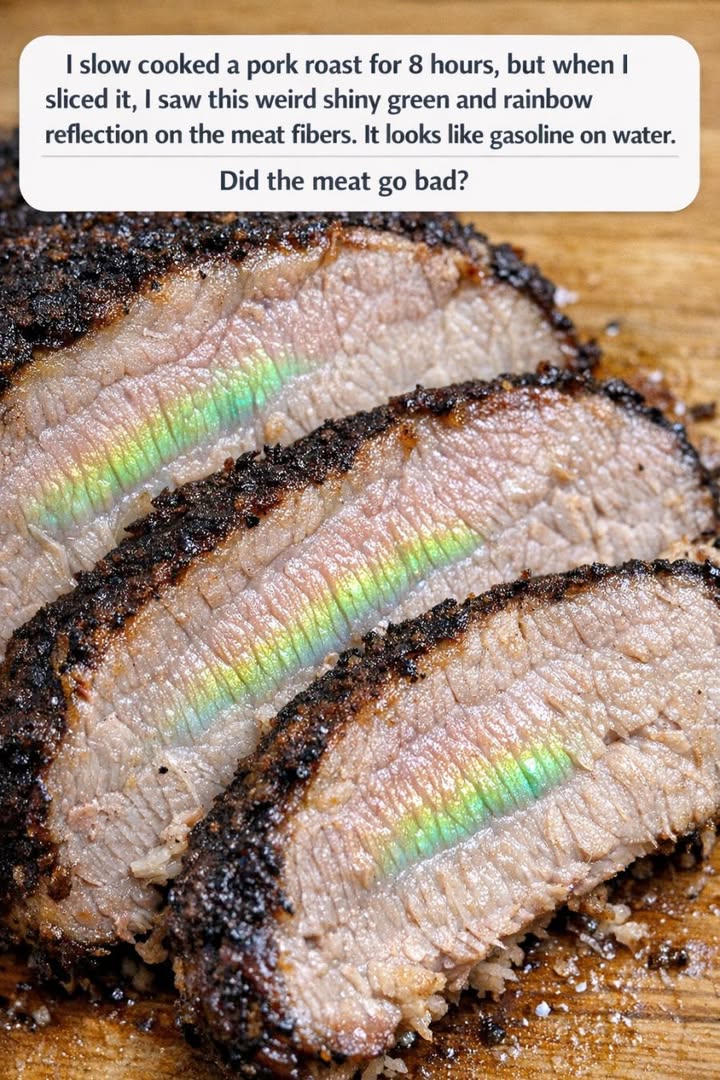
If you sliced into your slow-cooked pork roast and saw a shiny green or rainbow reflection that looks like gasoline floating on water, take a deep breath. In most cases, that effect is completely normal and does not mean the meat has gone bad.
This phenomenon is called meat iridescence, and it’s an optical effect—not spoilage.
What That Rainbow Shine Actually Is
The rainbow or green sheen you’re seeing is caused by light diffraction. Pork muscle fibers are tightly packed and arranged in parallel lines. When you slice the meat—especially thinly—the surface exposes those fibers in a way that interacts with light.
When light hits the cut surface:
-
It reflects and refracts at different angles.
-
The structure of the muscle fibers separates the light into different wavelengths.
-
Your eye perceives a rainbow or greenish shimmer.
It’s similar to:
-
Oil on water
-
A soap bubble
-
A CD reflecting light
It may look strange, but it’s a physical light effect—not bacteria, mold, or rot.
Why It Shows Up More in Slow-Cooked Pork
Slow cooking can actually make this effect more noticeable because:
-
The meat becomes very tender.
-
Muscle fibers align and separate more cleanly.
-
Moisture content changes.
-
Slicing across the grain exposes smooth fiber surfaces.
Certain cuts (like pork loin or roast) show this effect more often than others.
When It’s Harmless (Which Is Most of the Time)
The rainbow sheen is safe if:
-
The pork smells normal (mild, savory, not sour)
-
The texture is tender but not slimy
-
There’s no sticky residue
-
The color of the meat itself looks normal (light brown/gray outside, pale inside depending on cut)
-
It was stored properly before cooking
-
It reached a safe internal temperature (145°F / 63°C minimum, though slow cooking often goes higher)
If those conditions are met, the meat is safe to eat.
Signs That Actually Indicate Spoilage
Now, here’s when you should worry:
-
Sour or rotten smell
-
Sticky or slimy surface
-
Gray-green patches that are dull (not shiny rainbow, but murky discoloration)
-
Mold growth
-
Foamy or unusual liquid
-
The meat sat at unsafe temperatures before cooking
If you notice any of those, discard it.
But a shiny green rainbow reflection alone? Not a red flag.
Does Slow Cooking Increase Food Poisoning Risk?
Not if done correctly.
Slow cookers are designed to:
-
Gradually bring food above the bacterial danger zone (40°F–140°F)
-
Maintain safe cooking temperatures
-
Reach safe internal meat temps
If your roast cooked for 8 hours on LOW or HIGH and reached proper temperature, it is not unsafe simply because of the sheen.
Why It Looks Like Gasoline on Water
That specific “oil slick” look happens because:
-
Muscle fibers are arranged like microscopic layers.
-
Light bends as it passes across the cut surface.
-
The angle of your slice changes how intense the effect appears.
If you tilt the meat under light, the color will shift. That shifting is the giveaway that it’s optical—not spoilage.
Quick Kitchen Safety Check
If you’re unsure, do this:
-
Smell it. Fresh cooked pork smells savory, not sour.
-
Touch it. It should feel moist but not sticky.
-
Look at the color. The meat itself should look normal, not gray-green in a dull way.
-
Consider storage. Was it refrigerated properly before cooking?
If all checks pass, it’s safe.
How to Reduce the Rainbow Effect (If It Bothers You)
If the look makes you uncomfortable:
-
Slice at a slightly different angle.
-
Let the meat rest longer before cutting.
-
Cut thicker slices.
-
Reheat briefly—sometimes the sheen is less noticeable warm.
The appearance does not affect taste or safety.
[mashshare]
