
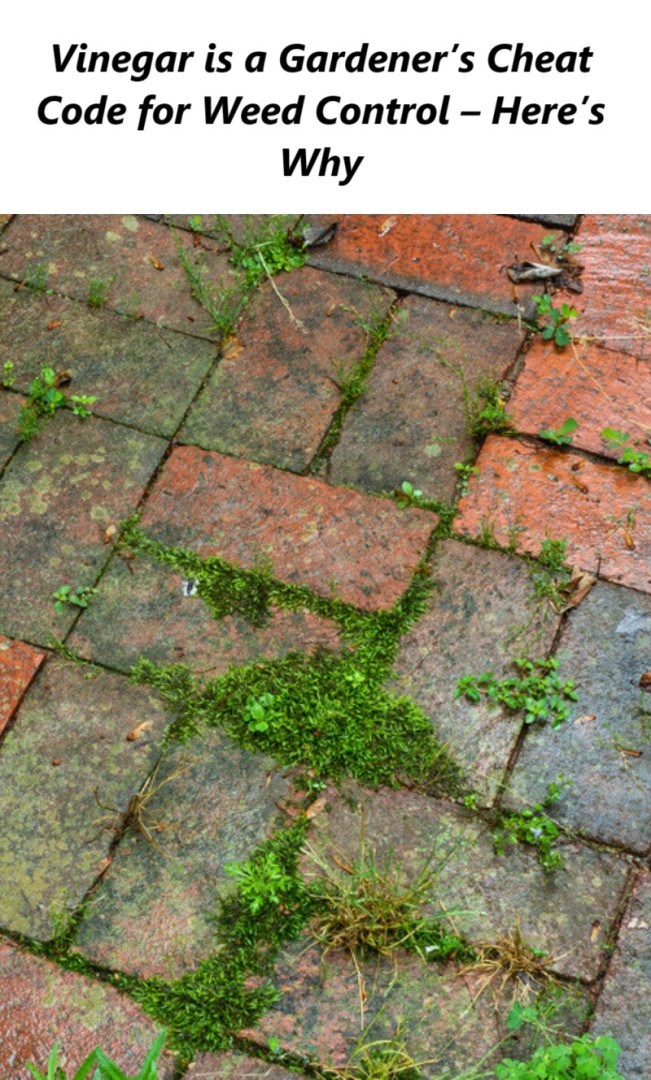
Weeds are one of the most persistent problems gardeners face. They compete with plants for water, nutrients, and sunlight, and they can quickly take over lawns, paths, and garden beds. While chemical herbicides promise fast results, many gardeners are now looking for safer, cheaper, and more natural alternatives. One of the most talked-about solutions is surprisingly simple: vinegar.
Often found in every kitchen, vinegar has earned a reputation as a “gardener’s cheat code.” But why does it work, how effective is it really, and how should it be used correctly? Let’s take a closer, professional look.
Why Vinegar Works Against Weeds
The secret behind vinegar’s weed-killing power lies in acetic acid. Household vinegar typically contains about 5% acetic acid, while horticultural vinegar can contain 10–20% or more.
Acetic acid works by:
-
Breaking down plant cell walls
-
Drawing moisture out of leaves
-
Causing rapid dehydration of the plant
When vinegar is sprayed directly onto weed leaves, it damages the foliage almost immediately. Within hours, the plant begins to wilt, and within a day or two, many small weeds appear completely dead.
This fast, visible effect is why so many gardeners swear by it.
Best Types of Weeds Vinegar Can Control
Vinegar is most effective against:
-
Young, newly sprouted weeds
-
Annual weeds with shallow roots
-
Weeds growing in cracks, driveways, patios, and walkways
Examples include:
-
Dandelion seedlings
-
Chickweed
-
Crabgrass (young growth)
-
Clover (early stage)
Because vinegar acts on contact, it works best when weeds are small and actively growing.
Where Vinegar Really Shines
Vinegar is especially useful in areas where traditional weeding is difficult or where chemicals are undesirable.
It is ideal for:
-
Sidewalk cracks
-
Gravel paths
-
Driveways
-
Fence lines
-
Edges of patios and stones
In these places, there is little risk of harming desired plants, making vinegar a practical and efficient solution.
The Right Way to Use Vinegar as a Weed Killer
To get the best results, technique matters.
How to apply:
-
Use plain white vinegar (5%) for light weed problems.
-
Spray directly on weed leaves — avoid the soil and nearby plants.
-
Apply on a hot, sunny, dry day for maximum effectiveness.
-
Reapply if weeds regrow, especially with tougher varieties.
Sunlight increases vinegar’s drying effect, helping it work faster and more efficiently.
Important Limitations You Should Know
Despite its popularity, vinegar is not a miracle solution.
Key limitations include:
-
It usually kills only the top growth, not deep roots
-
Perennial weeds may regrow
-
It is non-selective, meaning it can harm any plant it touches
-
Repeated use can lower soil pH over time
This means vinegar should be used carefully and selectively, not sprayed broadly across garden beds.
Is Vinegar Safer Than Chemical Herbicides?
Compared to synthetic weed killers, vinegar:
-
Breaks down quickly in the environment
-
Leaves no long-term chemical residue
-
Is safer around pets and children when used properly
However, stronger horticultural vinegar can irritate skin and eyes, so gloves and eye protection are recommended when handling higher concentrations.
Vinegar vs. Commercial Weed Killers
| Feature | Vinegar | Chemical Herbicides |
|---|---|---|
| Speed | Very fast (hours) | Fast to moderate |
| Root kill | Limited | Often effective |
| Environmental impact | Low | Moderate to high |
| Cost | Very low | Higher |
| Selectivity | Non-selective | Often selective |
For many gardeners, vinegar is best seen as a maintenance tool, not a complete replacement for all weed control methods.
Final Thoughts
Vinegar truly earns its reputation as a gardener’s cheat code — when used in the right place and the right way. It’s affordable, accessible, and surprisingly powerful against young weeds, especially in hardscaped areas.
While it won’t replace every weed-control method, vinegar is an excellent addition to a smart, eco-conscious gardening routine. Sometimes, the simplest solutions really are hiding in plain sight — right in your kitchen cabinet.
[mashshare]
