
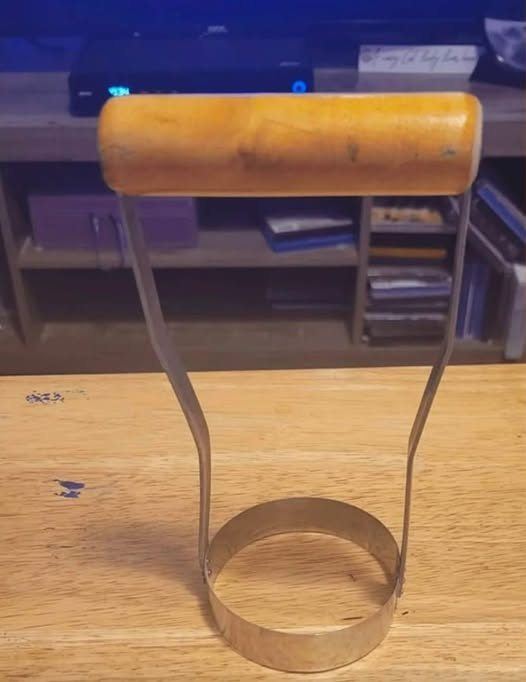
A Blast from the Past: Do You Recognize This Homemaking Tool?
How everyday objects tell the story of how we lived
There’s something magical about stumbling across an old household tool. Maybe it’s tucked away in a grandmother’s kitchen drawer, hanging in a garage, or spotted in a thrift store with no label and a thousand guesses attached. You pick it up, turn it over in your hands, and wonder: What is this? Who used it? How did it fit into daily life?
Before smart appliances, before convenience buttons and disposable everything, homemaking relied on tools that were simple, durable, and surprisingly clever. These objects weren’t just functional—they reflected the rhythms, values, and creativity of the people who used them.
So when someone asks, “Do you recognize this homemaking tool?” they’re really asking something deeper: Do you remember a different way of living?
When Tools Were Built to Last
One of the first things people notice about vintage homemaking tools is how solid they feel. Heavy metal. Thick wood. No plastic in sight.
These tools were designed for longevity. They weren’t replaced every few years. They were sharpened, repaired, passed down, and sometimes repurposed. A kitchen tool wasn’t just an accessory—it was an investment.
In a time when budgets were tight and waste was frowned upon, durability mattered. Homemakers needed tools that could handle daily use without fail. And they did—often for decades.
The Mystery Tool Phenomenon
If you’ve ever seen an image of an unfamiliar old kitchen or laundry tool posted online, you know what happens next.
Comment sections light up with:
“My grandmother had one of these!”
“We used this every Sunday.”
“I had no idea what it was until now.”
These moments are more than nostalgia. They’re collective memory in action. A single object can unlock shared experiences across generations and continents.
Mystery homemaking tools remind us how much knowledge used to be passed down informally—by watching, helping, and doing. You didn’t Google how to use a tool. Someone showed you.
A Closer Look at Common Vintage Homemaking Tools
While the specific tool may vary, many fall into familiar categories. Each tells a story about daily life before modern convenience.
1. Manual Kitchen Tools
Before electric mixers and food processors, everything was done by hand.
Think of:
Hand-crank egg beaters
Rotary graters
Cast-iron meat grinders
Wooden butter paddles
These tools required time and physical effort. Cooking wasn’t rushed—it was rhythmic. Tasks had a pace that matched the day, not a timer.
2. Laundry and Cleaning Tools
Housework was labor-intensive, and the tools reflected that reality.
Items like:
Washboards
Mangles and wringers
Carpet beaters
Lint scrapers made of wood or metal
Cleaning was physical work. It took strength, endurance, and planning. A single tool could serve multiple purposes, and efficiency was born from necessity.
3. Sewing and Repair Tools
Clothing wasn’t disposable.
Homemakers relied on:
Darning mushrooms
Button hooks
Thimbles
Measuring tools worn smooth from use
Repair was routine, not optional. A small tool could extend the life of a garment by years.
Why These Tools Look So Unfamiliar Today
Many old homemaking tools seem puzzling to modern eyes because the tasks they were designed for have either disappeared or been automated.
We no longer:
Render fat at home
Beat rugs outside
Mend clothes regularly
Prepare ingredients entirely from scratch
Modern appliances consolidated multiple steps into one button. In doing so, they also erased the need to understand how something worked.
The unfamiliarity isn’t just about the object—it’s about the lost skills behind it.
The Emotional Connection to Everyday Objects
What makes old homemaking tools so powerful isn’t just function—it’s emotion.
For many people, these tools are tied to memories:
A mother humming while cooking
A grandmother teaching a child to sew
The smell of clean laundry hung outdoors
These tools witnessed ordinary moments that became meaningful over time. They were present for family meals, quiet afternoons, and daily routines that formed the backbone of home life.
When we recognize an old tool, we’re often recognizing a feeling as much as an object.
Ingenuity in Simplicity
One of the most striking things about vintage homemaking tools is how smart their design often was.
Without electronics, they relied on:
Leverage
Gravity
Rotation
Human rhythm
They solved problems efficiently using basic principles. Many were multi-functional, adaptable, and easy to repair.
In some cases, these older designs outperform modern alternatives in durability and precision—a reminder that innovation didn’t start with technology.
What We Can Learn From the Past
Looking back at old homemaking tools isn’t about romanticizing hard labor. Many of these tasks were exhausting, especially for women whose work was undervalued and unpaid.
But there are lessons worth carrying forward:
Respect for resources
Appreciation for craftsmanship
The value of maintaining what we own
Slowing down enough to be present
Modern convenience has given us time—but how we use that time is a separate question.
The Return of Old Tools in Modern Homes
Interestingly, some of these “blast from the past” tools are making a quiet comeback.
People are rediscovering:
Hand tools for sustainability
Manual methods for mindfulness
Traditional skills for self-sufficiency
Farmhouse kitchens, zero-waste lifestyles, and slow-living movements have brought renewed interest in tools that connect effort with outcome.
In a digital world, there’s comfort in something tangible.
Preserving Knowledge Before It Disappears
As generations pass, so does practical knowledge.
Recognizing and naming old homemaking tools matters because it preserves history. When we ask elders what a tool was used for, we’re not just learning about an object—we’re honoring lived experience.
Museums preserve artifacts, but stories preserve meaning.
Final Thoughts
So—do you recognize this homemaking tool?
Whether the answer is yes or no, the question opens a door to reflection. These objects remind us that homes were once powered by human hands, creativity, and resilience. They tell stories of patience, skill, and everyday problem-solving that shaped family life for generations.
In a world of constant upgrades and disposability, looking back at these tools invites us to slow down and appreciate the quiet ingenuity of the past.
Sometimes, the simplest objects carry the richest histories.
[mashshare]
