
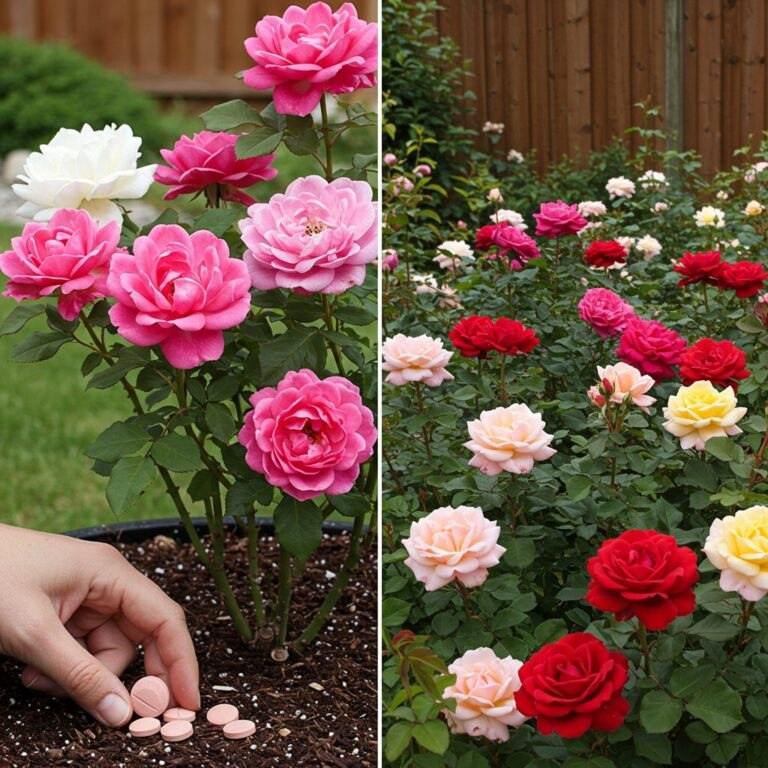
Roses are beautiful and beloved flowers that can bring charm to any home or garden. However, cultivating healthy roses can sometimes be challenging, especially for beginners. If you’ve recently purchased a rose bush that isn’t growing, isn’t blooming, or has flowers that keep falling off, there’s no need to worry. With the right care, you can restore your roses to their full glory, ensuring that the flowers last longer and the plant flourishes. In this article, we’ll discuss essential tips on how to properly care for your roses, including watering, fertilization, and techniques to promote longer-lasting blooms.
1. Proper Temperature and Location
Roses thrive in mild temperatures. Ideal growth conditions are typically between 18 and 25°C (64 to 77°F). It is crucial to place your rose bush in a location that receives ample sunlight. Roses require around 6 hours of sunlight daily to grow strong and healthy. However, it’s important to avoid harsh midday sun that could damage the flowers and leaves.
2. Watering Properly
Roses are plants that love water, but they do not tolerate overwatering. When watering your roses, aim to moisten the entire substrate (soil or growing medium), but never allow it to become soggy. Overwatering can cause the roots to rot, so it’s important to strike a balance.
A good rule of thumb is to water your roses every other day, ensuring that the soil is damp but not saturated. Allow the surface to dry out between waterings, and avoid letting the roots sit in standing water. Proper watering is key to healthy root development and overall plant growth.
3. Extending the Lifespan of Rose Blooms
To help your rose flowers last longer and maintain their vibrant appearance, a special solution can be applied to the flowers. The ingredients for this solution include:
-
1 liter of water
-
1 aspirin (cut into quarters
Once you’ve prepared the solution, use a spray bottle to apply it directly to the leaves and flowers of your roses. This mixture will help your flowers stay fresh for much longer, sometimes doubling the duration of their bloom period. By treating your roses with this simple solution, you can enjoy their beauty for an extended time.
Roses do more than just beautify your space; they also purify the air by removing toxins, making them a beneficial addition to any home. This solution not only prolongs the life of the flowers but can also enhance the
4. Fertilizing Your Roses
To encourage healthy growth and abundant blooming, fertilization is essential. Roses need specific nutrients to thrive, particularly nitrogen (N), phosphorus (P), and potassium (K), which support overall plant health and flower production.
A great choice for roses is an NPK 4-14-8 fertilizer, which contains 4 parts nitrogen, 14 parts phosphorus, and 8 parts potassium. This fertilizer promotes strong root development and enhances the flowering process.
-
To apply this fertilizer, mix one teaspoon of the NPK fertilizer into 500ml of water. Water your roses with this solution, but be careful not to over-saturate the soil. Apply the solution around the base of the plant, avoiding direct contact with the leaves. This will ensure that the nutrients are absorbed by the roots and support robust growth.
- For the best results, fertilize your roses twice a year: once in the spring and again in the fall. While NPK fertilizers are effective, you can also supplement with organic fertilizers monthly to provide additional nutrients. Just remember to avoid over-fertilizing, as excessive nutrients can harm the plant.
5. Pruning Your Roses
Roses benefit from occasional pruning, especially when they start to look overgrown or tired. Pruning helps remove dead or damaged branches, which encourages new growth and more vibrant blooms. The best time to prune roses is during the winter months when the plant is dormant.
[mashshare]
