
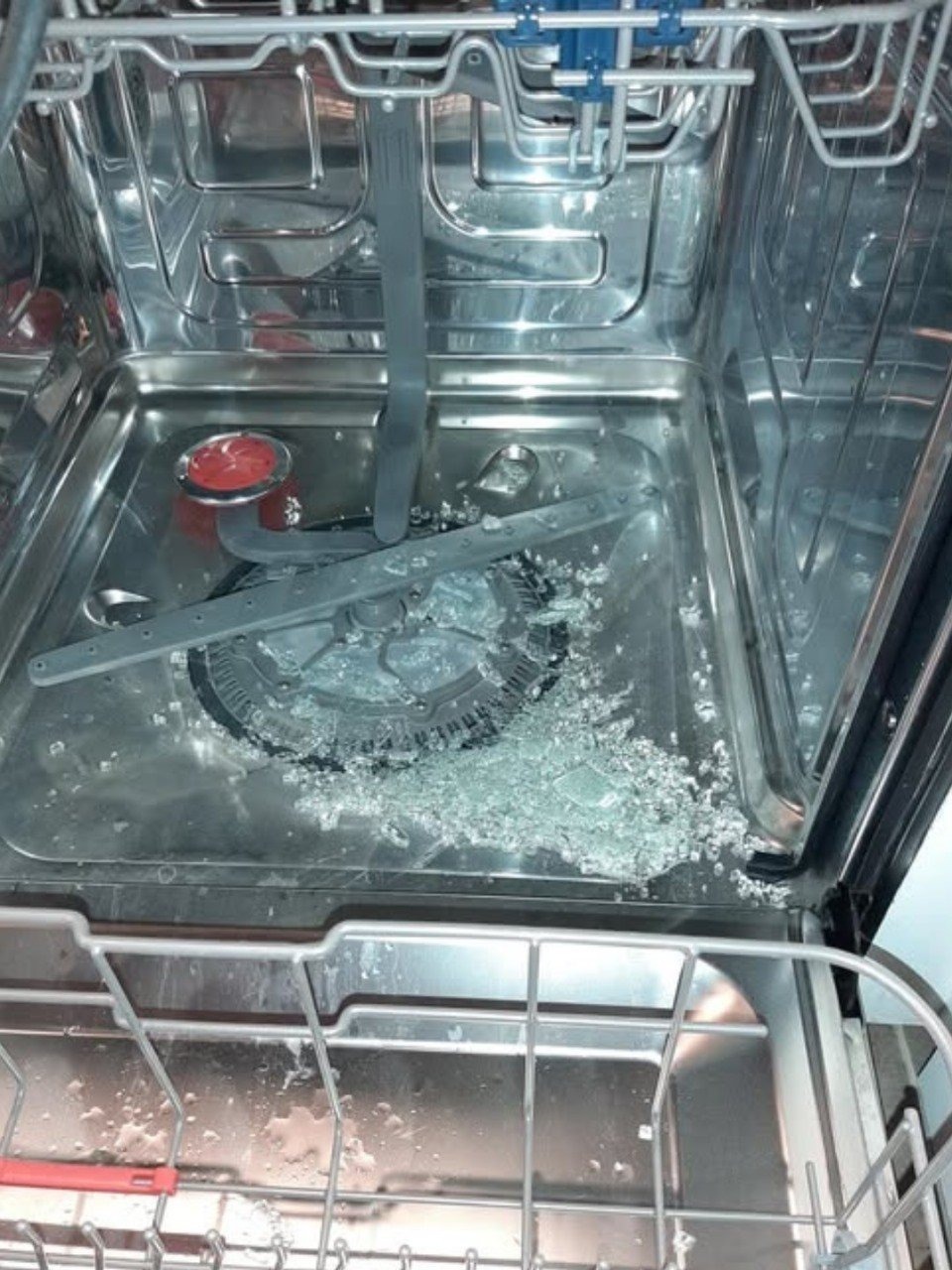
Let’s be honest — the dishwasher is one of the greatest inventions since sliced bread.
It saves time.
It saves effort.
It turns a mountain of dirty dishes into a clean stack with the push of a button.
But here’s the truth:
Not everything belongs in there.
Some items may look dishwasher-safe — but the high heat, harsh detergents, and powerful jets can ruin them in one cycle.
And once they’re damaged?
Knives lose their edge.
Wood cracks.
Coatings peel.
And your favorite mug stops keeping your coffee hot.
Let’s explore the 7 things you should never put in the dishwasher — and what to do instead.
Because sometimes, the best way to care for your kitchen tools is to wash them by hand.Kitchen supplies
1. Sharp Knives
Why not?
Dishwasher water blasts and clattering dishes can:
SEE NEXT PAGE
Continued on the next page
Dull the blade
Chip the edge
Loosen the handle
Even high-end knives with “dishwasher-safe” labels suffer over time.
What to do:
Wash by hand with mild soap and dry immediately.
Hone regularly and store in a block or sheath.
2. Wooden Utensils & Cutting Boards
Why not?
Wood absorbs water — and the dishwasher’s heat and moisture cause it to:
Warp
Crack
Split
Lose its finish
Plus, repeated exposure can loosen glue in cutting board seams.
What to do:
Hand wash with soapy water, rinse, and dry upright.
Occasionally oil with food-grade mineral oil to keep it healthy.
3. Delicate Crystal & Fine China
Why not?
The high-pressure spray and alkaline detergents can:
Cloud crystal (permanently)
Crack fine porcelain
Fade hand-painted designs
Even “dishwasher-safe” china can degrade over time.
What to do:
Wash by hand in lukewarm water with a gentle detergent.
Use a soft sponge and air-dry on a towel.
4. Cast Iron Cookware
Why not?
The dishwasher is the arch-nemesis of seasoning.
It strips away the polymerized oil layer that makes cast iron:
Non-stick
Rust-resistant
Flavor-enhancing
After one cycle, your skillet may come out bare, rusty, and sticky.
What to do:
Clean with a brush and hot water (no soap needed).
Wipe dry, apply a thin layer of oil, and heat on the stove briefly.
5. Nonstick Pans & Cookware
Why not?
Dishwasher detergents are highly alkaline — they eat away at nonstick coatings over time.
Result?
Flaking
Peeling
Food starts stickingGroceries
Your $80 pan becomes useless in months.
What to do:
Wash by hand with a soft sponge.
Avoid metal utensils to preserve the surface.
Stovetop Stuffing Mix
6. Items with Adhesive Labels
Why not?
Stickers, price tags, and labels dissolve in hot water, leaving behind:
Sticky residue
Gunk in your dishwasher filter
A mess on your dishes
Even if the label seems “stuck on,” the dishwasher will loosen it — and spread the goo everywhere.
What to do:
Peel off labels before washing.
Use a bit of oil or rubbing alcohol to remove leftover stickiness.
7. Insulated Travel Mugs & Thermoses
Why not?
Double-walled mugs (like Hydro Flask, Yeti, or Thermos) rely on a vacuum seal to keep drinks hot or cold.
Dishwasher heat can:
Break the seal
Compromise insulation
Cause condensation inside the walls
Suddenly, your coffee goes cold in 20 minutes.
What to do:
Hand wash with warm, soapy water.
Use a bottle brush for the inside.
Dry thoroughly before reassembling.
Bonus: Other Dishwasher No-Nos
Aluminum cookware
Can discolor or pit
Gold- or silver-rimmed dishes
Metallic trim can tarnish or flake
Plastic containers (thin)
Can warp or melt
Sharp cheese graters
Can dull; debris gets trapped
Electric appliances (kettles, blenders)
Water damages internal components
When in doubt — check the manufacturer’s label.
Final Thoughts: Sometimes the Best Way to Clean Is to Do It Yourself
We love the dishwasher.
We rely on it.
We even name it (looking at you, “Dishy”).
But just like any tool, it has limits.
And when it comes to protecting your favorite kitchen tools — the ones that make cooking easier, safer, and more enjoyable — a little extra care goes a long way.Kitchen supplies
So next time you’re loading the dishwasher…
Pause.
Look.
Ask:
“Will this survive — or suffer?”
Because sometimes, the difference between a tool that lasts 10 years and one that dies in 10 washes…
Isn’t in the quality.
It’s in the sink.
[mashshare]
