
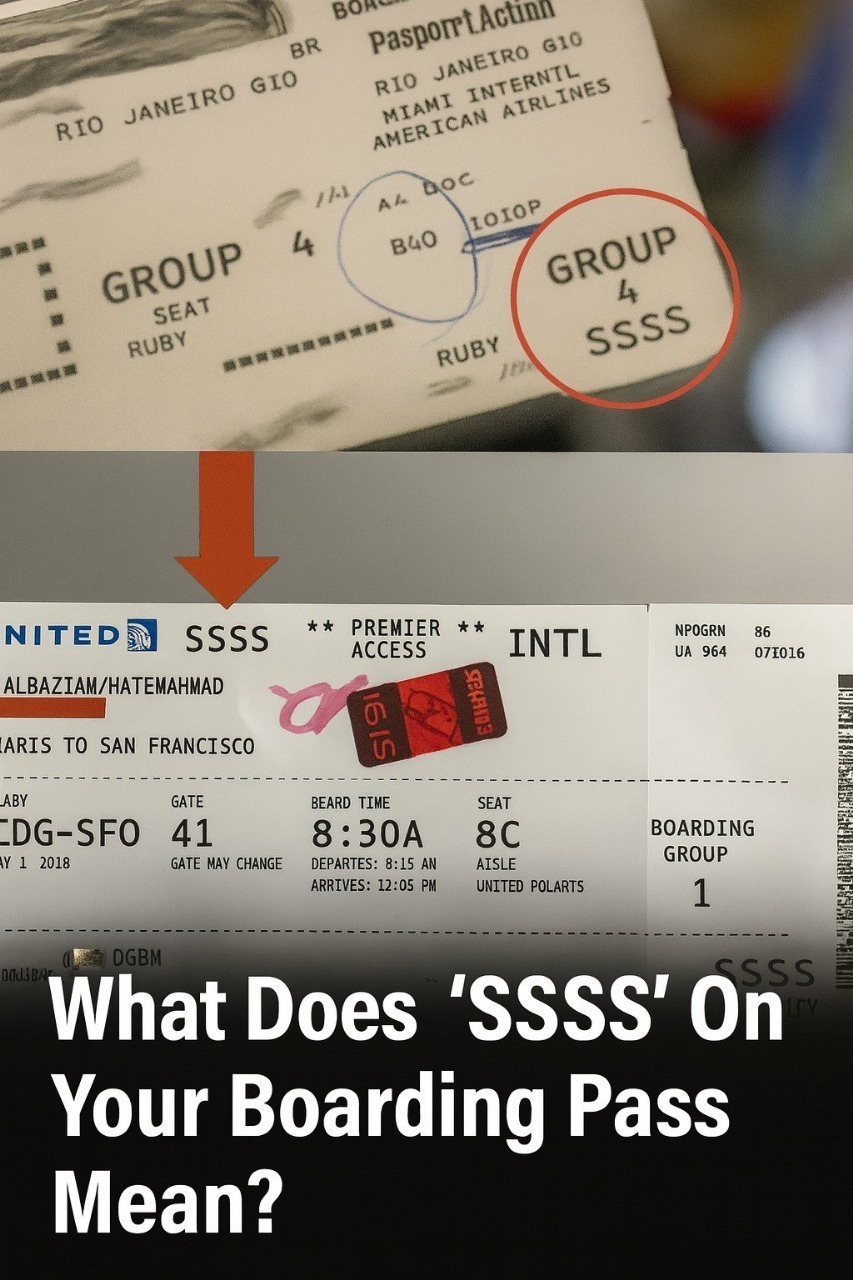
If you’ve ever glanced at your boarding pass and noticed the letters “SSSS” staring back at you, your first reaction was probably confusion—or panic. After all, most of us are used to the familiar: flight numbers, departure times, and gate codes. Four mysterious letters in all caps? That’s enough to make anyone feel like they accidentally signed up for a spy thriller.
But what exactly does SSSS mean? And more importantly, how does it affect your travel experience? Let’s break it down, step by step, so you can board your flight with confidence instead of anxiety.
What ‘SSSS’ Stands For
“SSSS” stands for Secondary Security Screening Selection. In plain English, it means the Transportation Security Administration (TSA) has flagged your boarding pass for extra screening at the airport.
This isn’t necessarily a judgment or accusation. It doesn’t automatically mean you are suspicious, dangerous, or under investigation. It simply indicates that TSA has determined your flight or travel profile requires additional security checks before you can board.
Secondary screenings can include:
A more thorough luggage inspection (both carry-on and checked baggage)
Enhanced pat-downs
Additional questioning by security officers
Scanning of electronic devices
In short, “SSSS” signals that TSA wants to look a little closer at your items and, sometimes, you.
Why You Might Get ‘SSSS’
There’s no single reason why someone receives SSSS. In fact, it can feel random. But TSA and security experts have identified several common triggers:
Random Selection
TSA sometimes selects passengers randomly to ensure that the system remains unpredictable. Randomization is a key tool in aviation security.
If you get SSSS by chance, it’s not personal—it’s just a part of a random security measure.
Traveling Internationally
Certain international flights, especially those to or from countries with heightened security alerts, often have more passengers flagged for secondary screening.
Some routes are under more scrutiny due to international security agreements or past incidents.
Ticketing Irregularities
One-way tickets, last-minute bookings, or tickets purchased with cash can trigger the SSSS flag.
Frequent changes to your itinerary can also make the system take a closer look.
Name Matches or Watchlists
If your name or travel documents resemble someone on a government watchlist, you might be selected for extra screening.
This is rare, but it does happen.
Previous Security Issues
If you’ve ever triggered an alert on TSA’s system—for example, carrying prohibited items—you may be flagged for secondary screening in future travels.
What to Expect at the Airport
If your boarding pass has SSSS, you’ll notice a few differences at the airport, but nothing to panic about. Here’s what typically happens:
Separate Screening Line
Passengers with SSSS are usually directed to a separate line for secondary inspection. This line may be longer, so plan extra time before your flight.
Carry-On and Checked Baggage Checks
TSA officers will likely inspect your luggage more thoroughly. This could include opening bags, checking electronics, and screening personal items.
Enhanced Pat-Downs
Security may perform a pat-down search, which is more detailed than the standard security check. You may also be asked to remove certain clothing or accessories.
Questioning
Officers may ask questions about your travel plans, the purpose of your trip, or your itinerary. This is standard and does not imply wrongdoing.
Device Screening
Laptops, tablets, and other electronics may be scanned separately. Make sure your devices are charged and accessible.
Tips for Dealing with SSSS
Being flagged for SSSS doesn’t have to ruin your travel day. Here’s how to make the process smoother:
Arrive Early
Extra screening can take additional time. Arrive at least 2–3 hours before your flight, especially for international travel.
Be Prepared
Keep your ID, boarding pass, and travel documents handy.
Have your electronics charged and easily accessible.
Stay Calm and Cooperative
Security officers are doing their job. Being polite, patient, and cooperative helps the process go faster.
Pack Smart
Avoid prohibited items in carry-on luggage. Use TSA-approved liquids containers and keep items organized.
Consider removing laptops and electronics from your bag before reaching the screening area.
Know Your Rights
TSA has published guidelines for secondary screening. You can request a private screening if needed, especially for sensitive situations or medical devices.
Can You Avoid SSSS?
Some travelers wonder if there’s a way to bypass this extra security. While there’s no guaranteed method, a few steps may reduce the likelihood:
Enroll in TSA PreCheck or Global Entry
TSA PreCheck can reduce random selection for secondary screening on domestic flights.
Global Entry is particularly helpful for international travelers, as it streamlines re-entry into the United States.
Book Flights Strategically
Avoid last-minute bookings or unusual ticketing patterns if possible.
Use a consistent name format across your travel documents.
Follow Travel Guidelines
Keep travel documents accurate and up-to-date.
Avoid carrying items that could raise red flags during security checks.
Despite these precautions, it’s important to remember that some selection is purely random, and that’s by design.
SSSS and Privacy Concerns
For many, seeing SSSS raises questions about privacy and profiling. While the exact TSA algorithms are confidential (to maintain security), some points are worth noting:
It’s not necessarily personal. Being selected doesn’t mean TSA suspects criminal activity.
It’s based on risk factors. These can include travel patterns, ticket types, or security protocols for certain routes.
TSA keeps data secure. Personal information is used only for security purposes, not public disclosure.
Understanding that SSSS is part of a larger system can help passengers feel less targeted and more prepared.
Real-Life Experiences of SSSS Passengers
Many travelers have shared stories about receiving SSSS on their boarding passes. Some common experiences include:
Random selection shock: First-time SSSS passengers often feel anxious, thinking they did something wrong. Most find the process straightforward once they understand it.
Extra time required: Passengers often need to add 30–60 minutes for secondary screening. Planning ahead helps prevent missed flights.
Friendly officers: While the process can feel invasive, most TSA officers are professional and courteous. Cooperation usually speeds things along.
Some travelers even report that SSSS flags come and go; you might be selected on one flight and not the next.
Conclusion: Understanding SSSS Makes Travel Less Stressful
Seeing SSSS on your boarding pass can be intimidating at first, but it doesn’t have to ruin your travel experience. Knowing what it means, why it happens, and how to prepare can turn anxiety into confidence.
Remember:
SSSS stands for Secondary Security Screening Selection.
It doesn’t imply wrongdoing. It may be random or triggered by risk-based factors.
Extra screening can include luggage checks, pat-downs, and device scans.
Arriving early, staying calm, and cooperating makes the process smoother.
Enrollment in TSA PreCheck or Global Entry can sometimes reduce your chances of being selected.
Ultimately, SSSS exists to keep air travel safe. While it might feel inconvenient, it’s part of a broader system designed to protect passengers, crews, and flights. Understanding it removes the fear of the unknown and replaces it with a sense of preparedness—because knowing what those four letters mean is the first step to flying with peace of mind.
[mashshare]
